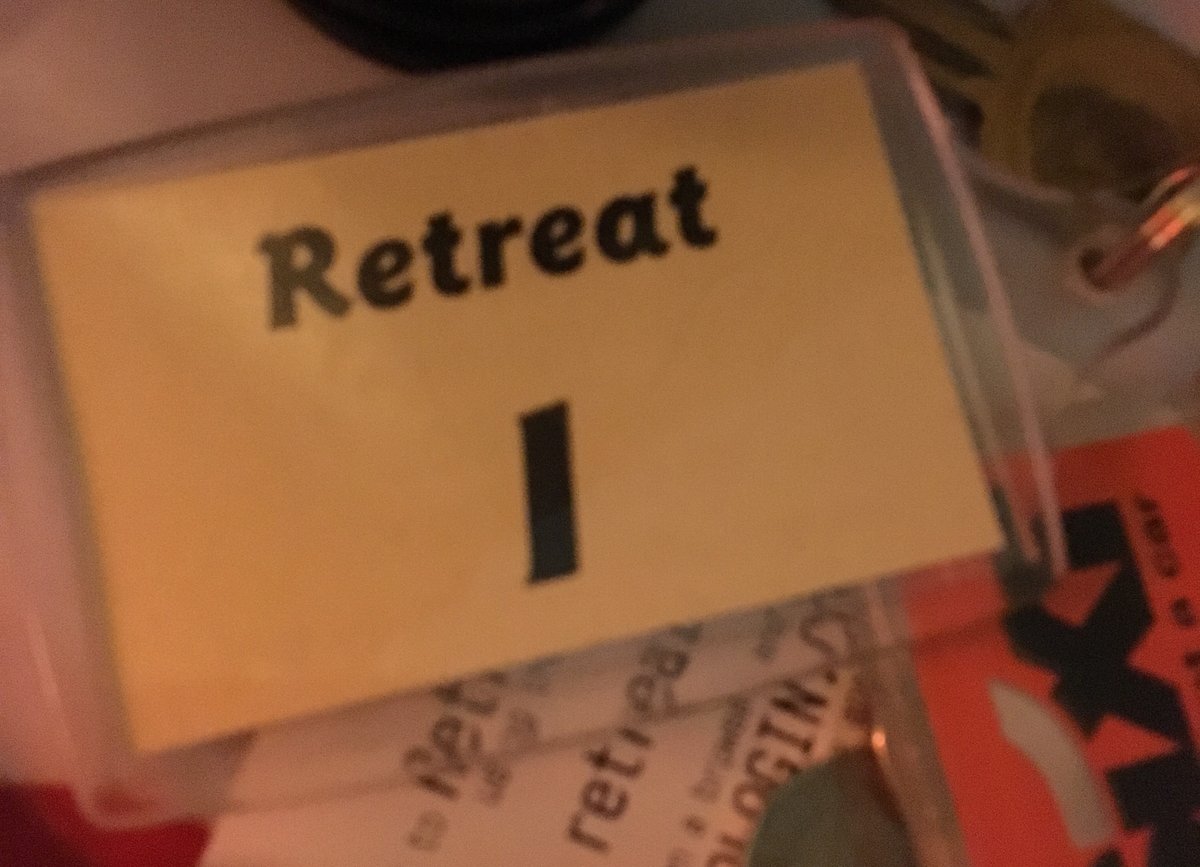
My introduction to meditation was when myself and Mrs Me did a three day (secular) retreat at the Kagyu Samye Ling Monastery in November of 2017. At the time it felt important to state the “secular” part. I’m less hung up on that part now. The below image wasn’t a loyalty card to the monastery, it was the room we were staying in, but it is kind of cool that it is labelled retreat 1.
At first I wanted to learn how to meditate as a means of “being less stressed”. An almost comedy stereotypical case of someone in a tech exec role developing some requirement to germinate an existential awareness. When you’re embedded in technology on a day to day basis, it is very easy to start asking questions around permanence and purpose. Especially when most things you create have a shelf life of around one to three years. You make a thing, you use a thing, you delete a thing.
The cool trick
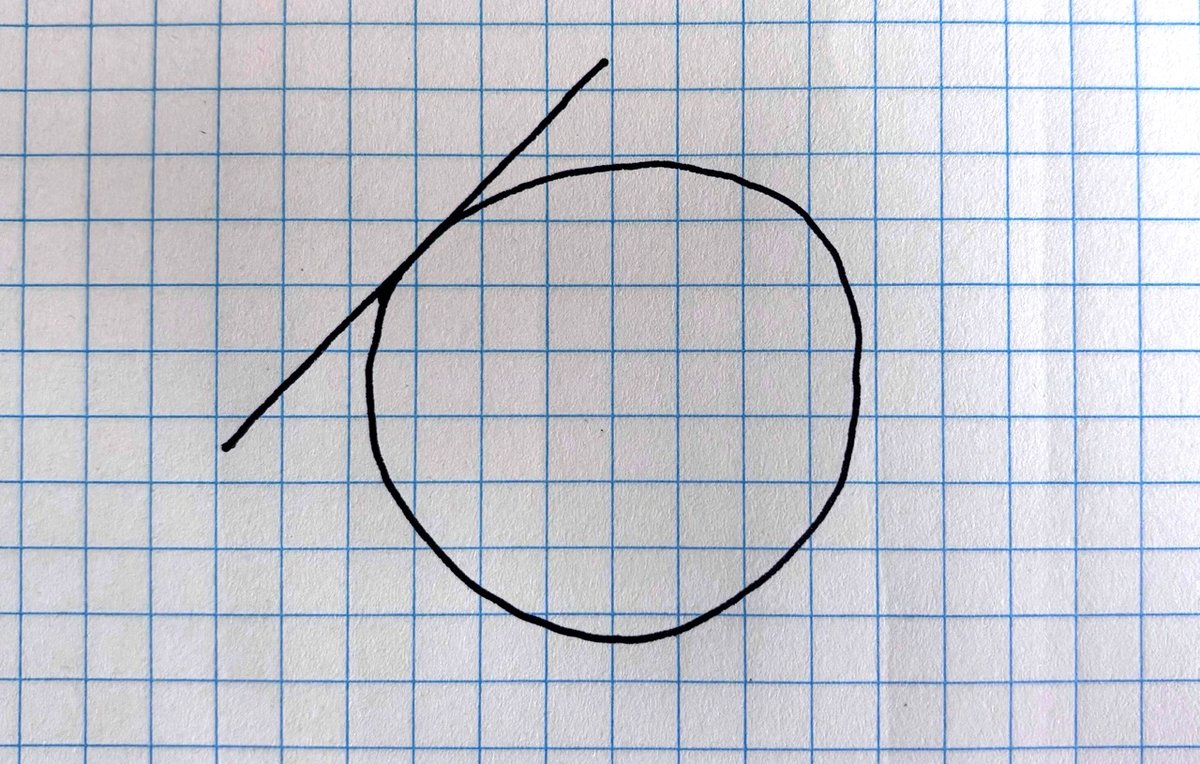
There’s only so much that you can take away from a three day mediation retreat. For me it was in learning how to sit, breathe and do a cool trick with your attention. My mind Our minds are a constant stream of thoughts and I tend to think of my attention as a circle.
When a thought enters a mind, sometimes it can capture and hold your attention – being thirsty, hungry or wanting a “thing” are types that tend to capture my attention. Some thoughts however, just arise, you pay them a bit of attention, but they don’t stick and you let them go. When you sit and meditate the first way you are taught is to close your eyes and focus on your breathing. You count as you inhale and exhale. Inhale, one, exhale, two, inhale, three, exhale four etc etc. If you lose count, because a thought captured your attention, you go back to one. If you get to ten, you go back to one. You don’t lose by going back to one and you don’t win by getting to ten. 1
For me, In order to do this I visualised resting my attention against my senses. I don’t know why but this image has always been what I’ve held in my minds eye.
Eventually, when you do this for long enough and practice it enough, you experience the cool trick. You initially get short periods of time where “you” become separated from your thoughts. You can “experience” them arising, presenting themselves and you’re able to let them go without getting distracted by them.
Distraction
The key part about that cool attention trick is that you begin to see how you for the most part, permanently distracted. You may get some relief in your work when focused, but generally speaking when you spend long enough being able to distance yourself from your thoughts and “watch” them arise, present themselves and disappear you will eventually accept this idea as a fundamental truth.
If you do it enough in formal practice it becomes a tool to use in daily life. Sometimes when I’m in the kitchen for a mundane task such as feeding the cats I find myself reaching for a sneaky snack. I probably shouldn’t keep the cat food next to the dried fruit, nuts and chocolate but it’s a small house so needs must. The development of catching a thought such as “eat some chocolate” is now something I can catch in mid-flight before I physically take action on it. When all is well in my world I can get to the point of holding a square of chocolate at my mouth and detaching from the though. I put the chocolate back and then eat it when I planned to eat it – after dinner.
The chocolate is one example. The point is you develop this skill over your impulses. You notice they’re primarily driven by thoughts which become physical vehicles when your attention gives the thought “software” some physical operation “hardware” and grant it read and write access into the physical world.
Authentication
It didn’t take long for me to come to the conclusion that every human mind in this world of ours is like an API with no authentication required to write into our minds. What I’ve found very helpful is that meditation, at least for me, is a flavour of authentication for that API. When you’re able to hold your attention outside of your thoughts, they inherit no default permission to write to your attention.
I’m not arguing for five minutes of meditation per day giving you an ability to be immune to the advertising, or targeted nudge twisted behavioural science or even the generally physiologically adversarial world we live in. But I am suggesting you can begin to train your attention to distance your thoughts in the same way you can train yourself to sit up straight. You won’t always be sat up straight, but you’ll start to become aware of when you’re slumping and correct yourself. Same with attention.
Secular, but a slippery slope
The thoughts that you allow past your attention to form an attachment with or disgust to will start defining the boundary of what makes “you”, “you”. But that’s a slippery slope.
Notwithstanding the above sentence, you don’t need to connect any of the above things to a religion or philosophy. You can keep the above “strictly science based” and you’ll get a lot of benefit out of it. But once you start taking meditation seriously and listening to teachers (the waking up app was a big help from 2018-2021) you’ll find that you cannot avoid philosophy presenting itself and challenging any secular ideas you’re identifying with.
But that’s a whole other rabbit hole.
If you ever get the chance to visit the Kagyu Samye Ling Monastery in Scotland, I recommend you do. It was by far, the most peaceful place I’ve ever spent time in. I’ve never slept as well as I did in that place. It was two nights of the best sleep I’ve ever had.

-
Many times I’ve counted eleven because I’ve allowed myself to get distracted by celebrating getting to ten. ↩